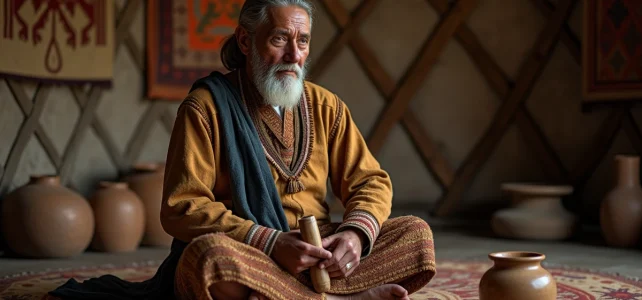
In some cultures, the status of shaman has sometimes been attributed to individuals exhibiting atypical behaviors or unusual states of consciousness, which are considered elsewhere as signs of mental disorder. This surprising proximity between ritual practices and psychiatric diagnoses continues to fuel debates.
Anthropological data show that the boundaries between mystical experience and mental pathology vary across societies and eras. Interpretations oscillate between spiritual recognition and medical stigmatization, raising questions about the perception of normal and pathological.
Related reading : Basketball: Duration Differences Between FIBA and NBA Rules
Shamanism and Mental Illness: Origins, Beliefs, and Representations Throughout History
Over the centuries, shamanism has been viewed as a reservoir of beliefs and rituals that intrigues as much as it divides. Whether revered in Siberia or the Amazon, the shaman remains this complex figure, in contact with spirits, traversing altered states of consciousness, both healer and sometimes marginalized. This figure, sometimes recognized as a spiritual guide, sometimes sidelined, embodies a persistent question: the link between shamanism and mental illness.
Researchers like Mircea Eliade and Michael Harner have shown how fluid this boundary can be. Where the West diagnoses, other cultures see a valuable ability: visions, voices, episodes of possession, far from being systematically pathologized, sometimes become signs of a calling. At the heart of this debate, the notion of magical thinking allows for a deep analysis of shamanic practices.
See also : Between Leaks and Previews: Where to Find Automotive Scoops?
Shamanic consciousness is characterized by transformed perceptions, sometimes likened to schizophrenia or schizotypy in medical classifications. But to reduce these experiences to a disorder is to dismiss their symbolic, social, and therapeutic significance.
To better understand these issues, a few key elements must be recalled:
- The way these phenomena have been interpreted over time raises the question of the threshold between illness and ability.
- The perspectives on shamanism have transformed, at the crossroads of the history of religions, anthropology, and psychiatry.
This interplay between shamanism and mental illness ultimately reflects the ongoing tension between Western rationality and much older traditions, between medicine and what escapes its usual domain.
What Rituals and Practices to Heal the Mind? Between Shamanic Traditions and Contemporary Approaches
In shamanic cultures, the care of the mind is organized around rituals passed down from generation to generation. The shamanic journey, triggered by trance, propels the shaman into altered states of consciousness. There, he encounters animal spirits or auxiliary spirits, central figures of the invisible, whose help is sought to diagnose or heal. The use of medicinal plants punctuates these ceremonies, opening the door to visions or the collective unconscious.
Among the Kogi Indians of Colombia, for example, the shaman acts as a mediator between worlds. He acts for the community, attempting to restore the broken balance between the individual and the universe. The guardian spirits accompany him, protect, and sometimes impose trials. Here, healing does not stop at the individual: it involves repairing social ties and restoring harmony with the environment.
This traditional foundation today inspires new approaches. Some therapists explore altered consciousness to unravel deep blockages, while others rely on the symbolism of spirits to access the unconscious. But how to combine subjective experience, ritual heritage, and scientific validity? The lines between care, spirituality, and psychology blur, evidence of a persistent interest in these practices from a universe where the invisible occupies a central place.

Spiritual Healing or Stigmatization: How to Distinguish Myth, Reality, and Preconceptions?
The debate surrounding shamanism and mental illness constantly oscillates between fascination and distrust. In the West, these practices are often filtered through myths or preconceptions. Some see them merely as a vestige of ancient beliefs, while others perceive them as a lever for personal development or a path to deep healing. There is also the rise of neo-shamanism, omnipresent in the New Age movement: a blend of ancient rituals, trance, and promises of transformation. But this enthusiasm is not without risks: confusion between psychiatric disorders and communication with spirits, commodification of the cultural phenomenon, sectarian drifts, all of which fuel concerns.
In Western society, the boundary between spiritual healing and pathology remains blurred. The experience of the spirit world can enrich the lives of some, but it also exposes them to stigma, isolation, or even non-consensual treatments. The shaman, depending on the context, assumes various roles: healer, mediator, sometimes even artistic performer. Reducing the original system of shamanism to a panacea or folklore would ignore its dynamics: transmission, listening, recounting individual and collective suffering.
Between subjective experiences, real dangers, and contemporary enthusiasms, each shamanic journey invites a reconsideration of consciousness, care, and how our societies welcome, or reject, what falls outside the ordinary framework. This will provide ample food for thought, between shadows and lights.