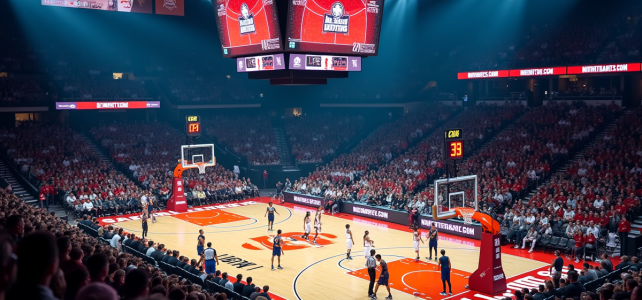
Basketball, a universally appreciated sport, is played under different rules depending on the leagues. Two of the most influential, FIBA and the NBA, present notable differences, particularly regarding the duration of matches. These variations significantly impact the pace and strategy of the teams.
Under FIBA rules, matches are divided into four periods of 10 minutes each, totaling 40 minutes of play. In contrast, the NBA opts for four quarters of 12 minutes, bringing the total duration to 48 minutes. This difference may seem minimal, but it considerably alters the intensity and effort management of the players.
Read also : Between Leaks and Previews: Where to Find Automotive Scoops?
Duration of Matches According to FIBA Rules
The International Basketball Federation (FIBA) dictates specific rules regarding the duration of a basketball match. These rules are applied in most international competitions, including the Olympic Games and world championships.
Structure of Playing Time
A match under the FIBA umbrella consists of four distinct periods, each lasting 10 minutes. This format, established to promote a sustained and strategic pace, relies on several key elements:
Further reading : Understanding the Link Between Shamanism and Mental Illness: Origins, Beliefs, and Realities
- Four periods of 10 minutes: Each period is designed to maintain a high intensity throughout the match.
- 15-minute halftime: After the first two periods, a 15-minute break allows players to recover and coaches to adjust their strategies.
- Timeouts: Teams have two timeouts per period, with an additional timeout in overtime, allowing for significant tactical adjustments.
Comparison with Other Leagues
The duration of a basketball match under FIBA rules contrasts with that of the NBA, where each quarter lasts 12 minutes. This 8-minute difference per match influences not only the pace of the game but also the endurance required from athletes. In a setting where every second counts, these time variations play a decisive role in the approach of teams and coaches.
| Rules | Total Duration | Periods | Timeouts |
|---|---|---|---|
| FIBA | 40 minutes | 4 x 10 minutes | 2 per period |
| NBA | 48 minutes | 4 x 12 minutes | 7 per match |
Duration of Matches According to NBA Rules
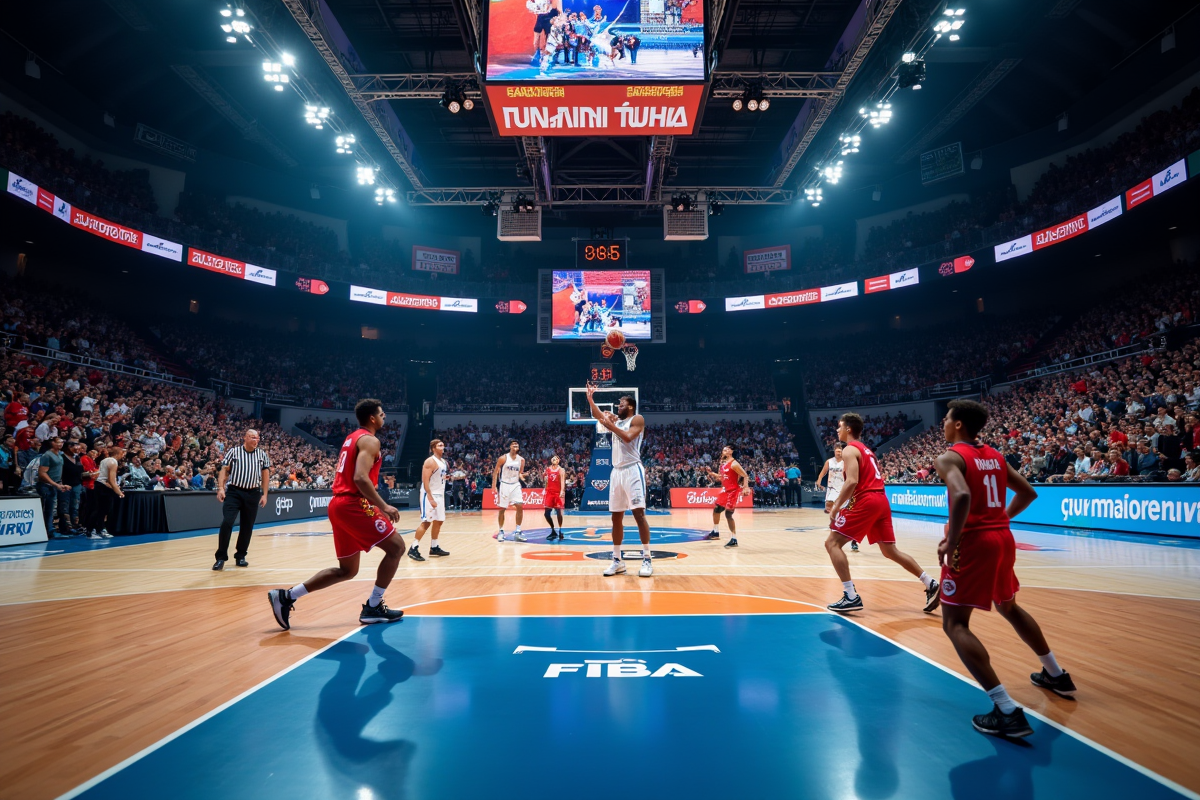
The National Basketball Association (NBA) imposes a distinct time framework from that of FIBA, strongly influencing the flow of matches. Under NBA rules, matches are divided into four quarters of 12 minutes each, resulting in a total of 48 minutes of actual play. This structure, longer than that of FIBA, tends to favor a more physical and strategic game.
Structure of Playing Time
The organization of periods and breaks in the NBA differs from that of FIBA, with notable implications for teams and spectators:
- Four periods of 12 minutes: Each quarter offers sustained intensity, allowing teams to exploit deep strategies in time and effort management.
- 15-minute halftime: A break identical to that of FIBA matches, providing an opportunity for recovery and fundamental tactical readjustment.
- Timeouts: Teams have seven timeouts per match, two of which can be used in the last two minutes of the fourth quarter. This flexibility allows for strategic adjustments in crucial moments of the match.
Comparison of Implications
The extended duration of NBA matches has repercussions on several aspects:
- Player Endurance: The necessity for better management of physical and psychological effort.
- Team Strategies: Greater leeway for tactical adjustments during the game.
- Spectator Experience: A longer spectacle, often considered more appealing to the audience.
These structural differences between FIBA and NBA formats extend beyond the duration of matches. They also influence the dynamics of the game and the preparation of teams, making each competition unique in its own right.