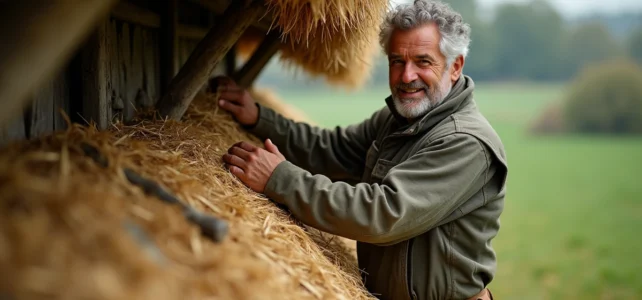
The thatched roof is no longer the privilege of houses from the past or villages frozen in time. Some municipalities impose strict rules to regulate the use of this material, while others tolerate, or even encourage, its return on contemporary buildings. Despite preconceived notions about its fire resistance or weather durability, modern techniques and targeted maintenance provide thatched roofing with a robustness and longevity that can be surprising, sometimes exceeding that of more traditional solutions.
The costs associated with this type of roofing heavily depend on the choice of thatch, the complexity of the framework, and specialized labor. Careful monitoring, year after year, significantly extends the lifespan of the roof while preserving its insulating performance.
Recommended read : Organizing Your Trip to Mauritius: Essential Information for a Successful Stay
The thatched roof: history, advantages, and technical specifics
The thatched roof embodies a unique expression of French architectural heritage, from the Norman villages to the marshes of Loire-Atlantique and the shores of Camargue. Inherited from a long legacy, thatched roofing makes use of a plant material often overlooked: reed, rye straw, or wheat straw. The bales of thatch are selected for their ability to conform to the framework and to form a covering that is dense, breathable, and durable.
The advantages of thatched roofing are numerous. First, its natural thermal insulation limits energy loss: cool in summer, warm in winter. Its lightness spares the framework, and its breathable nature regulates indoor humidity. With proper maintenance, a thatched roof can easily last over three decades.
Recommended read : How to Publish and Succeed with Online Ads: Practical Tips for Individuals
How to make a thatched roof relies on methodical preparation, from sorting the thatch to the actual installation. Each bale, carefully aligned, is fixed onto spaced battens, ensuring the waterproofing and solidity of the roof covering. This know-how, passed down from thatcher to apprentice, remains alive in several regions: Brittany, Loire, Camargue… sometimes under the watchful eye of heritage architects.
The renewed interest in thatched roofing can be explained by the search for renewable materials, as well as the demands for energy performance. Knowing how to make a thatched roof means reconnecting with an ancient practice while integrating contemporary requirements: efficiency, aesthetics, respect for regional identity.
What are the essential steps to create a thatched roof at home?
Prepare the support and select the thatch
Before starting, inspect the framework and check the solidity of the support. This guarantees a thatched roofing that will stand the test of time. The choice of thatch depends on your region: reed, rye straw, or wheat straw, each material has its own qualities. The quality of the bales directly impacts the resistance and longevity of the covering.
Fix the bales and shape the covering
The installation begins at the bottom of the slope: each row of bales of thatch is carefully overlapped to prevent any infiltration. The thatchers securely fix them using metal rods or stainless steel wire, anchored to the battens of the framework. The dressing with a mallet allows for a smooth surface that is resistant to wind and rain.
To succeed in this step, keep these key points in mind:
- Thickness: A mat of about 30 cm ensures effective thermal insulation.
- Slope: A slope of at least 45° promotes water runoff and limits stagnation.
Finishing touches and maintenance
The ridges and peaks, often covered with grass or soil, reinforce the sensitive areas of the thatched roofing. Maintenance should never be neglected: remove moss if necessary, check the fixings, and quickly correct any weaknesses. An annual inspection by an experienced thatcher helps preserve the quality of the thatched roof and maintain its charm, typical of houses in Brittany, Loire, or Camargue.
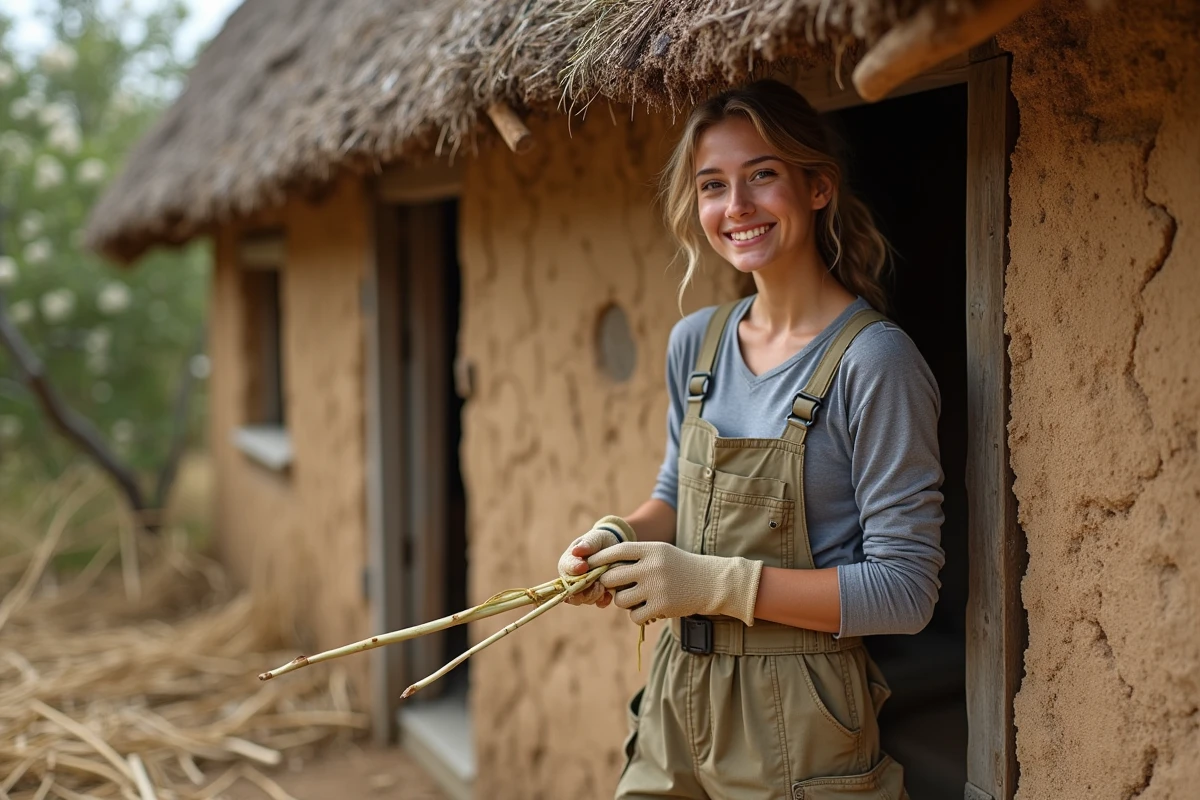
Maintenance, costs, and tips for successfully completing your thatched roofing project
Maintenance: preserving the lifespan of the thatch
Maintenance is key to the life of a thatched roof. A visual inspection each year, especially after winter or rainy spells, helps prevent the appearance of moss, lichens, or small infiltrations. For cleaning, prefer manual brushing: high-pressure jets should be avoided at all costs. The lifespan of a thatched roofing generally ranges between twenty-five and forty years, depending on the roof’s exposure and the quality of the material. A timely repair on a ridge or edge is often enough to extend the roof’s life without resorting to a complete renovation.
Price and renovation: anticipating the budget
The price of a thatched roof typically ranges from 110 to 140 euros per square meter, including installation. This price fluctuates based on the surface area, the complexity of the volumes, or the height of the building. The renovation of a thatched roof can be partial, which limits costs. It is advisable to consult several specialized artisans, ideally trained in the art of thatching, before starting.
Some guidelines for good organization:
- Regular maintenance: Annual inspection, gentle manual cleaning
- Lifespan: 25 to 40 years with good exposure and ongoing maintenance
- Average cost: Between 110 and 140 €/m², installation included
Creating a thatched roof requires rigor and patience. The slope must be respected, the choice of bales careful, and ventilation ensured underneath to avoid any persistent humidity. Success relies on the precision of the gesture and adherence to traditions that have been passed down, still very much alive in the regions where this know-how has endured through the centuries. A thatched roof is the combination of experience, technique, and a touch of dream suspended above our heads.