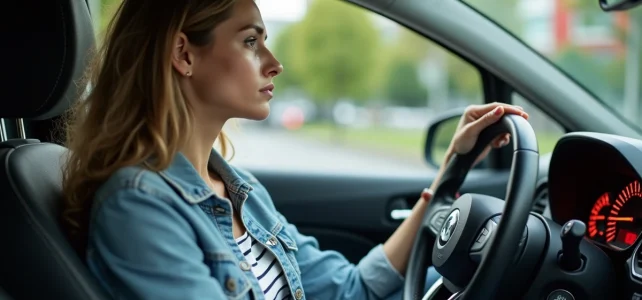
5 liters. That’s often all you have left when the reserve light comes on in the Twingo 3. No more, no less: a calculated margin, but it doesn’t completely erase the uncertainty once the orange light is on.
Between what you read on the screen and the reality of the road, there can sometimes be a world of difference. In the city, on the highway, uphill, or fully loaded, the distance remaining after the alert can fluctuate. It’s impossible to bet on a fixed rule; it’s better to deal with these multiple parameters to avoid running out of fuel at the worst moment.
Recommended read : How to Quickly Resolve Connection Issues with MyCitya: Practical Tips
Understanding the fuel reserve on Twingo 3: operation and usefulness
On the Renault Twingo 3, the fuel reserve exists to prevent you from running out of gas in case of an unexpected event: detour, traffic jam, gas station not found… When the orange light comes on the dashboard, you generally have about 5 to 6 liters left, depending on the version. This volume is not arbitrary: it results from precise calculations based on typical consumption, the operation of the system, and the tolerances provided by Renault.
In practice, this reserve provides a welcome buffer: enough to reach the next pump without stress, even if the situation becomes tense. The exact capacity depends on the year and model, but it usually ranges between 5 and 8 liters. The light does not force you to stop immediately, but it encourages you not to delay refueling indefinitely.
See also : How to Publish and Succeed with Online Ads: Practical Tips for Individuals
On the road, the onboard computer displays valuable information: remaining range, instantaneous consumption, average over the trip… These figures really help to anticipate. To go further or to find other feedback, the site fuel reserve autonomy on Twingo 3 offers a comprehensive overview and practical advice. By taking the time to consult this data and act accordingly, many avoid the pressure of an unexpected breakdown.
How far can you really drive once the light is on? Estimates and factors to know
The reserve light just came on? On average, there are between 80 and 100 kilometers left to drive before running dry, based on reports from owners and user figures. This number fluctuates depending on the city, the road, the terrain, and driving style. It’s difficult to establish an absolute certainty, as several factors come into play.
Here are the main parameters to watch that influence this distance:
- Driving style: heavy foot, quick accelerations, or harsh braking significantly impact consumption and reduce your margin.
- Traffic conditions and weather: traffic, a hilly route, headwinds, or low temperatures can reduce your range.
- Vehicle maintenance: under-inflated tires, clogged filters, or overloading also change the equation.
- Nature of the trip: in the city, on the highway, or on national roads, the impact on the remaining distance is not the same.
The onboard computer adjusts the displayed range in real time, depending on the evolution of these conditions. In practice, as soon as the reserve is activated, it’s wise to keep in mind that every detour or unexpected slowdown can bring you closer to empty. Fuel should never become a gamble with luck.

Risks, best practices, and tips to avoid running out of gas daily
Focusing on the reserve is not just a game with fate: the consequences far exceed mere fright. From a mechanical standpoint, driving with too little fuel increases the risk of damaging the pump, which is at risk of running dry, or causing deposits to accumulate in the system. Repairs can quickly cost the equivalent of a full tank… or even several.
From a safety perspective, running out of gas is anything but trivial: ending up stranded on a remote road or on the shoulder exposes you to tense situations, sometimes long roadside assistance, and unexpected costs.
To limit these surprises, adopt a few simple reflexes that make a difference:
- Be sure to locate gas stations in advance, especially for unfamiliar routes or poorly serviced areas.
- Maintain your car regularly: tires inflated to the correct pressure, clean filters, spark plug checks. A well-tuned Twingo consumes less.
- Adopt a smooth driving style: anticipate, avoid jerks, maintain a steady pace as much as possible.
- Keep a certified jerrycan on board, especially for long trips: an improvised refueling can sometimes make all the difference, provided safety measures are followed.
All these actions spare you unnecessary stress and provide better visibility on what the gauge really holds. The Twingo 3, true to the practical spirit of the range, won’t let you down without warning… as long as you know how to interpret its alerts and act in time. Range is gained as much through foresight as through technique.