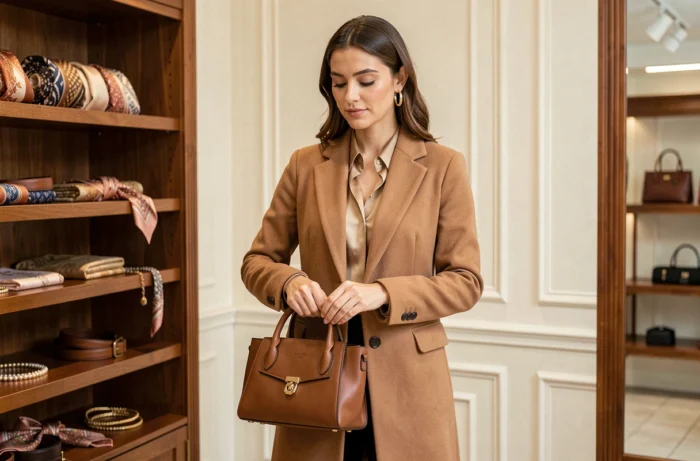
Fashion accessories are undergoing a transformation. The European regulation on ecodesign prohibits large companies from destroying unsold clothing, shoes, and accessories since July 19, 2026. This regulatory constraint is pushing the market towards more durable, repairable pieces designed to last several seasons.
At the same time, trends observed on the runways and in Parisian street style in 2026 show a clear shift: accessories now serve to express an identity rather than to discreetly complement an outfit.
Materials and Durability of Accessories: What the European Regulation Changes
The ban on destroying unsold items alters the upstream value chain. Brands that produce bags, belts, or jewelry in large quantities must absorb their stock or redistribute it. For consumers, this translates into easier access to end-of-line pieces at reduced prices, but also an incentive to choose materials that age well.
Full-grain leather, 316L stainless steel for jewelry, or acetate for eyewear frames are materials known for their longevity. A full-grain leather bag develops a patina over time, while faux leather cracks within a few seasons. This durability criterion directly aligns with the regulatory logic: a repairable and retainable accessory reduces the volume of unsold items to manage.
The trends of 2026 also incorporate second-hand jewelry and recycled materials, with a growing interest in engraving and monograms. Personalizing an existing piece rather than buying a new one fits into this framework. Among the accessories on the Tiffany and Co website, this logic of pieces designed to last through the years without losing their stylistic relevance is evident.
Statement Jewelry and Sculptural Bags: Functional Maximalism in 2026
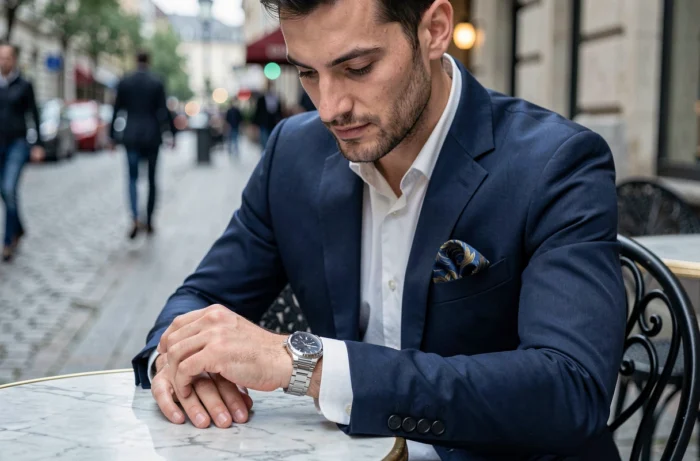
The so-called “quiet luxury” minimalism is giving way to bolder pieces. Market observations indicate a marked interest in statement jewelry, sculptural bags, and wide-frame glasses. The condition: these pieces must remain wearable on a daily basis.
This functional maximalism is distinct from accumulation. It is not about piling on necklaces or carrying a bag that holds nothing. Each bold accessory replaces several discreet pieces and becomes the focal point of an otherwise understated outfit.
Brooches, Scarves, and Personality Pieces
Brooches are making a comeback in everyday wardrobes, worn on a blazer lapel or directly on a turtleneck. The scarf, seen prominently in Parisian street style in 2026, is worn in unexpected ways: tied around the wrist, tucked into a belt, or attached to a bag handle.
These details fall under what trend observers call “personality accessories.” The goal is no longer perfectly discreet harmony but the expression of a visible identity through a unique choice.
Coordinating Metals and Leathers: The Visual Cohesion of an Accessorized Outfit
A technical point often overlooked concerns the coordination of metallic finishes. Belt buckles, bag clasps, watch bands, and jewelry coexist on the same silhouette. If one is gold and the others are silver, the overall look loses clarity.
The trends of 2026 confirm the return of gold in jewelry, belts, and bag elements. Aligning the color of metals (all gold or all silver) creates a visual continuity that the eye perceives without consciously analyzing.
The same logic applies to leathers. A black leather belt paired with a brown leather bag creates dissonance. Here are the coherence points to check before heading out:
- The shade of visible leathers (belt, bag, watch band, shoes) belongs to the same color family, without necessarily being identical
- The metallic finishes (buckles, clasps, jewelry) share the same tone, either gold or silver
- Only one accessory can intentionally break this coherence to serve as a focal point, provided the rest is aligned
Seasonal Accessories: Adapting Choices for Spring and Autumn
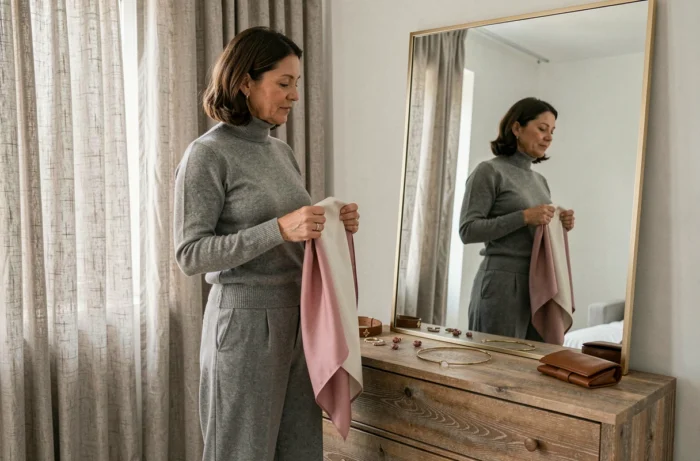
The seasonality of accessories is not limited to bringing out a scarf in winter. In spring, lightweight materials (linen, raffia, canvas) replace thick leather in bags and belts. Jewelry gains color with stones or enamels.
In autumn, heavy textures return: wool or thick silk scarves, structured bags in grained leather, felt hats. The hat, in particular, serves as both a framing element for the face and a protective item. Its return in the trends of 2026 goes beyond style to encompass functionality.
The Rule of a Single Focal Point
A common mistake is to multiply standout accessories in the same outfit. A statement necklace, a sculptural bag, and a wide-brimmed hat create three centers of attention that neutralize each other.
The most reliable method remains to choose a single strong accessory per outfit:
- A simple dress with an architecturally shaped bag, the rest of the accessories kept minimal
- A monochrome look enhanced by a visibly tied scarf, without competing jewelry
- A classic suit with an elaborate brooch as the only breaking element
The rest of the outfit supports the focal point without competing with it. This approach requires fewer pieces but more thoughtful choices.
The accessories market is evolving under dual pressure: regulatory on one side, stylistic on the other. Durable, repairable pieces that can complete an entire outfit are gaining ground against disposable accumulation. It remains to be seen whether shopping habits will follow this trajectory in the long term, or if the impulse for low-cost novelty will continue to prevail.