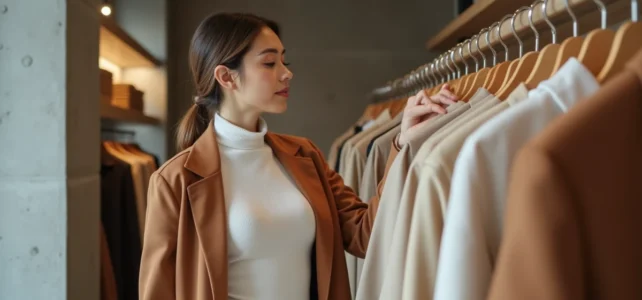
A fashion trend is not just about a color or a cut spotted on a runway. It is a set of clothing choices that reflect a stylistic movement shared by brands, designers, and buyers during a given season. For spring-summer 2026, the major directions favor wearable silhouettes for everyday life, far from purely demonstrative looks.
Fluid silhouettes and loose cuts: the fashion vocabulary of spring-summer 2026
The current collections confirm a shift towards pieces that can be thrown on without thinking. Long shorts, jorts (a contraction of jeans and shorts), and straight or slightly flared trousers dominate the editorial selections of the season, according to reports published by FashionUnited France and MKT Studio.
Related reading : The latest must-see web trends and news to discover
This shift towards fluid and easy-to-wear silhouettes reflects a change in priorities. The goal is no longer to display a logo or a spectacular piece, but to create a cohesive look with clothes that can be kept from one season to the next.
The colorful short jacket and the reimagined trench coat in a shortened version complete this wardrobe. These pieces work well with a barrel jean (wide and slightly tapered at the bottom) as well as with a midi dress. The approach is based on relaxed layering rather than the accumulation of strong pieces.
Read also : The latest women's fashion trends for a stylish look all year round
To explore selections that follow these directions, shopping on zazamode.fr allows you to spot pieces aligned with these trends without having to browse multiple platforms.
Trend colors and visual atmospheres: how fashion structures its palettes

The 2026 trend is not limited to declaring a key color. Brands are now building their collections around global visual atmospheres, where shades, materials, and cuts form a narrative whole. This atmospheric approach gradually replaces the simple dictate of “green is the color of the season.”
Among the chromatic directions identified this season, several palettes coexist:
- Butter yellow, a soft and bright tone that can be worn as a total look or as an accent on a light jacket, identified as one of the key shades of spring-summer 2026.
- Earthy and beige tones, particularly worn through beige trousers made of linen or cotton, which anchor an outfit in a natural register without appearing dull.
- Bright colors on small pieces (short jacket, bag, shoes), used as accents in an outfit with neutral bases.
This logic of atmosphere means that a style is built not piece by piece but by visual blocks. Choosing a palette before selecting a garment helps to create a wardrobe where everything naturally combines.
Budget considerations and sustainability: the angle that fashion shopping neglects
Most online shopping guides detail tips for tracking promotions or organizing outlet trips. These tips are useful, but they overlook a fundamental question: how to distinguish an impulsive purchase from a clothing investment?
The answer lies in a simple grid. Before finalizing a cart, three criteria can filter:
- Realistic wearing frequency: a piece worn less than once a month over the next twelve months costs more than it seems, regardless of its purchase price.
- Compatibility with the existing wardrobe: a garment that requires buying two other pieces to work is not a good deal.
- Resistance to trend cycles: reimagined classic cuts (oversized sweater, straight jeans, fluid dress) last through several seasons, unlike pieces heavily marked by a micro-trend.
A wardrobe built on solid basics costs less than a wardrobe renewed each season. This approach aligns with the concept of a “smart” wardrobe that is gaining traction in recent fashion advice, steering style towards reuse rather than accumulation.
Body shape and style: adapting trends to your silhouette
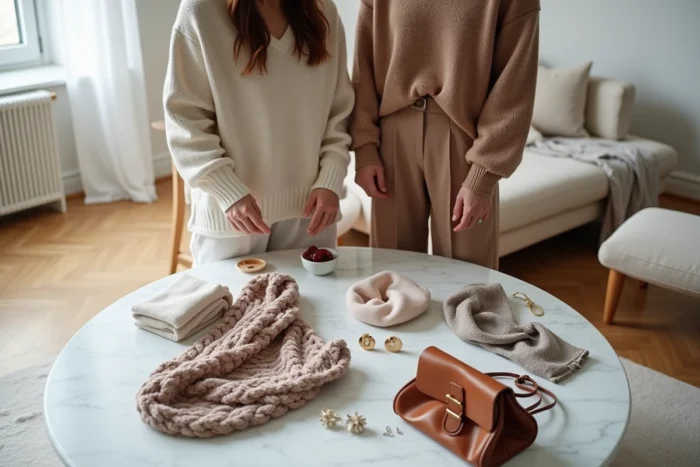
Wearing a trend without adapting it to your body shape rarely produces the desired result. The oversized sweater, for example, works differently on an H silhouette (shoulders and hips aligned) and on an A silhouette (hips wider than shoulders).
The basic principle remains the same regardless of the trend: identify the volumes that balance the silhouette. A loose cut at the bottom (barrel jeans, wide trousers) calls for a more fitted or semi-fitted top. An oversized jacket is better worn with a structured bottom.
This rule of proportion balance also applies to colors. Light shades attract the eye and visually widen the area where they are placed. Wearing butter yellow on top and a dark bottom creates a visual anchoring effect towards the shoulders, which suits A silhouettes but disrupts a V silhouette (wider shoulders).
Adapting a trend does not mean rejecting it. It means choosing the version of that trend (cut, color, length) that corresponds to your own body structure. A beige trouser comes in straight cut, wide cut, high-waisted, or mid-waisted. Each variant alters the perception of the silhouette.
Building a cohesive look without following all the trends
The most common trap in fashion is stacking trendy pieces without any connection between them. A stylish look relies on a common thread: a color palette, a style (casual, structured, minimalist), or a deliberate play of proportions.
The spring-summer 2026 wardrobe facilitates this coherence because its directions are compatible with one another. A colorful short jacket worn over fluid beige trousers with flat shoes forms a readable ensemble, grounded in current trends, without forcing it.
Three well-chosen pieces create a better look than six trendy pieces assembled randomly. The next time you open a shopping tab, keep in mind the palette and the desired silhouette before looking at prices. Style is built before the cart, not at the moment of clicking.